Block paving driveways, patios and paths laid on a proper sub-base with the edges concreted in, so they keep their shape.
Block paving has been the default British driveway for decades, and for good reason. It shrugs off cars and vans, it comes in a huge range of colours and patterns, and if a block ever gets damaged you lift that one block out and drop a new one in.
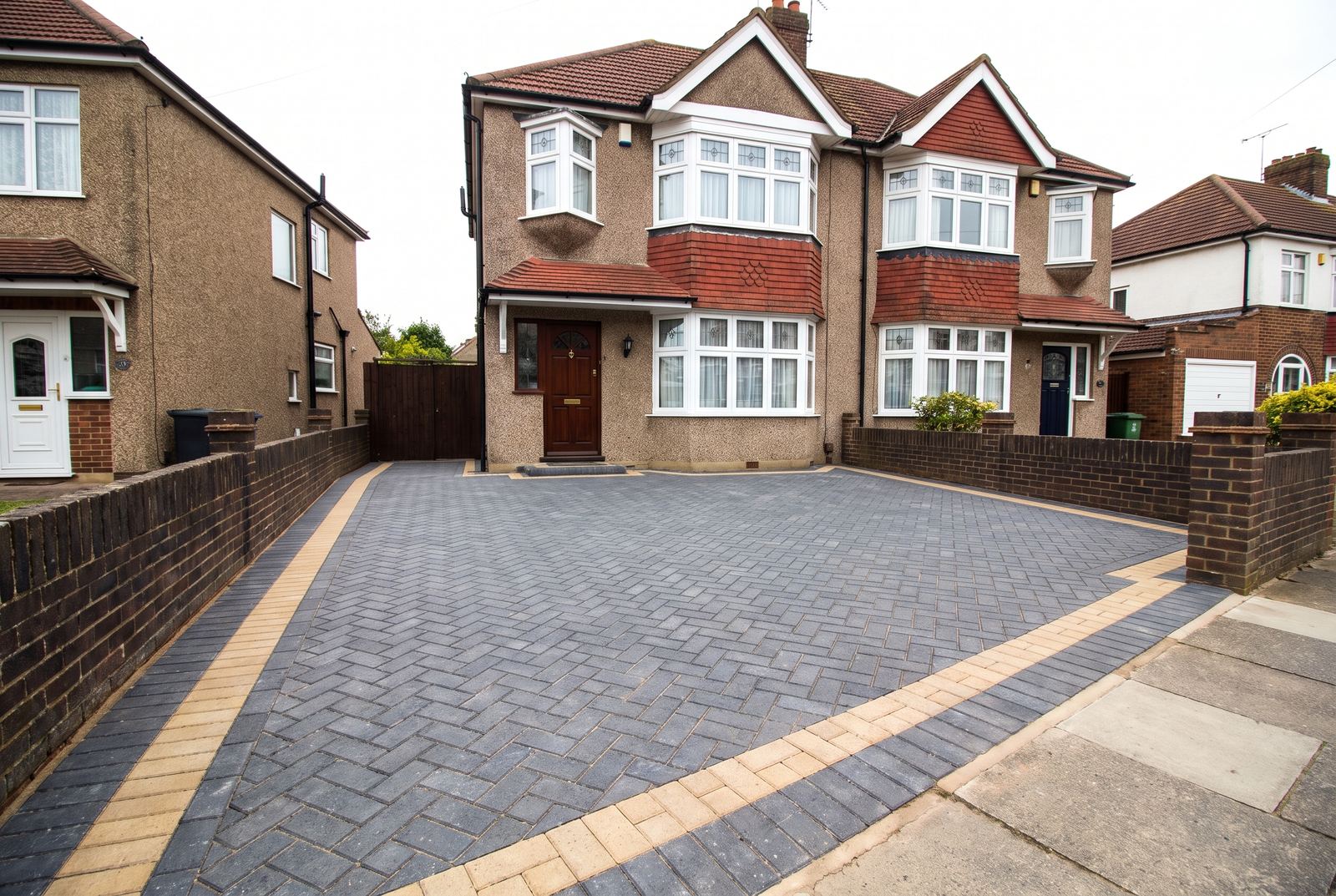
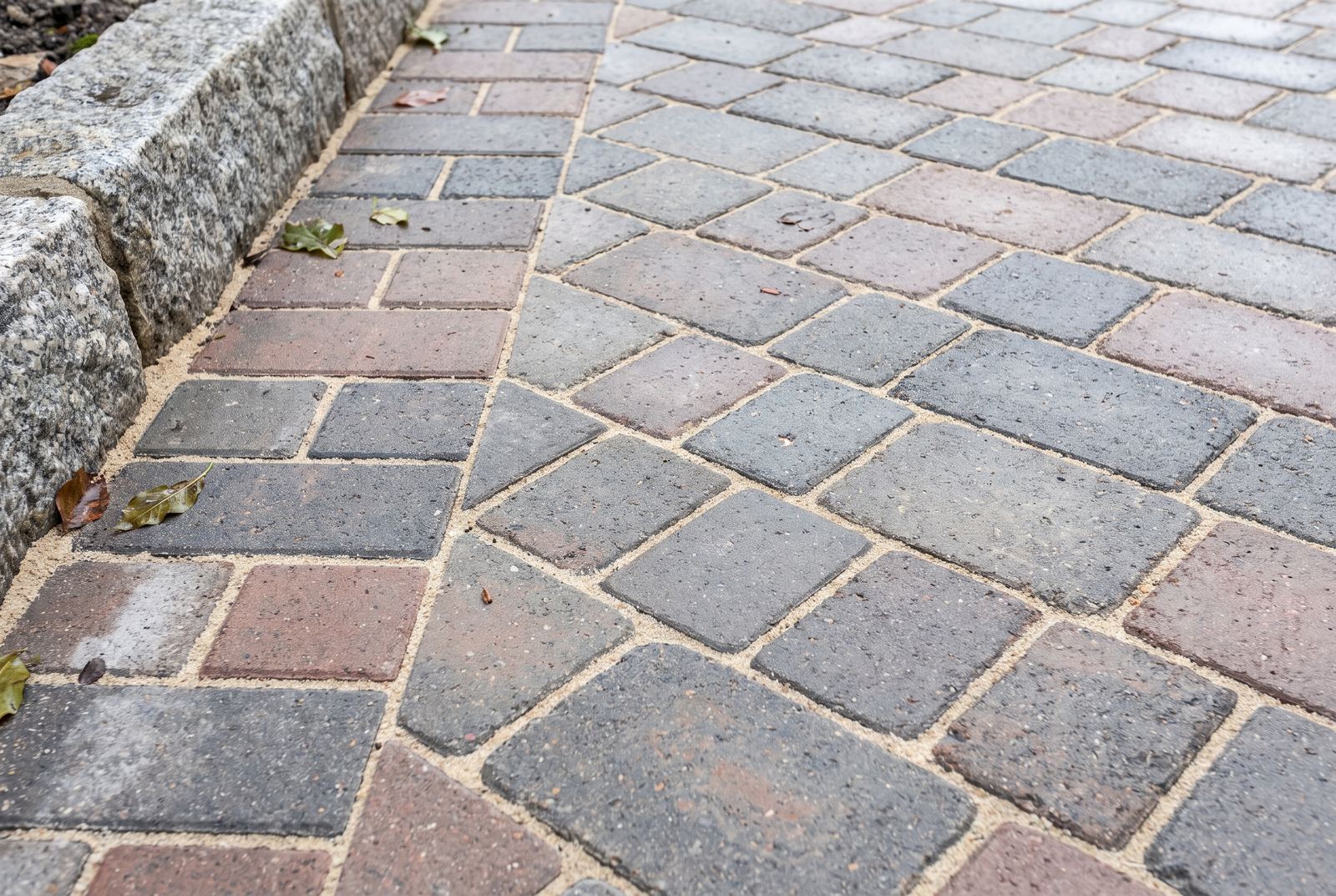
We lay driveways in 45 degree herringbone because it is the bond that genuinely copes with cars, cut the edges in with a saw rather than a hammer, and haunch every kerb and edge restraint in concrete before a single block goes down.
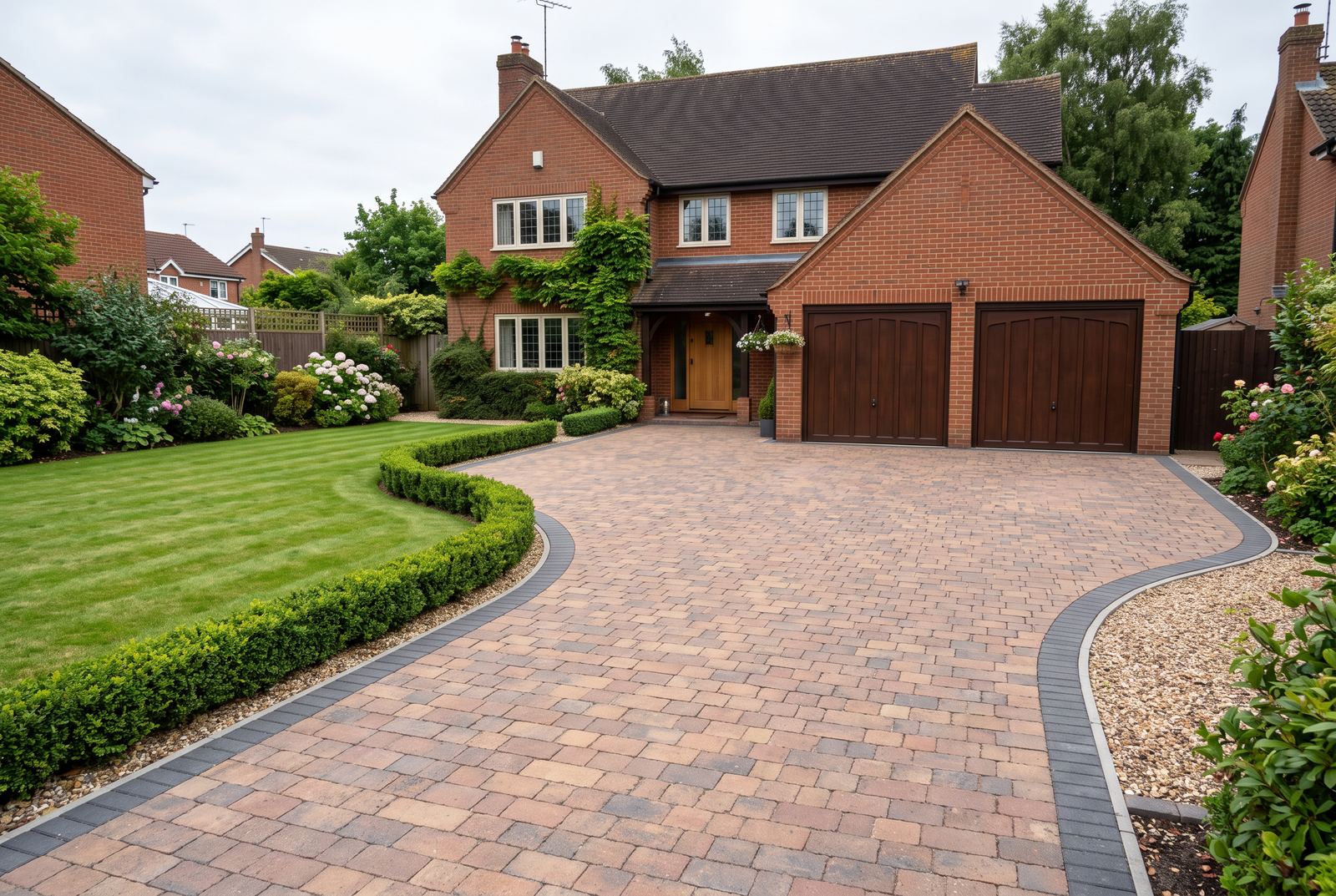 Block Paving · Surrey
One team covers the whole job from the excavation to the final sweep. Here is what is included as standard.
Laid in herringbone with a soldier course border.
Basketweave and stretcher bonds for areas that never see a car.
Extra space for a second car, tied into the existing drive.
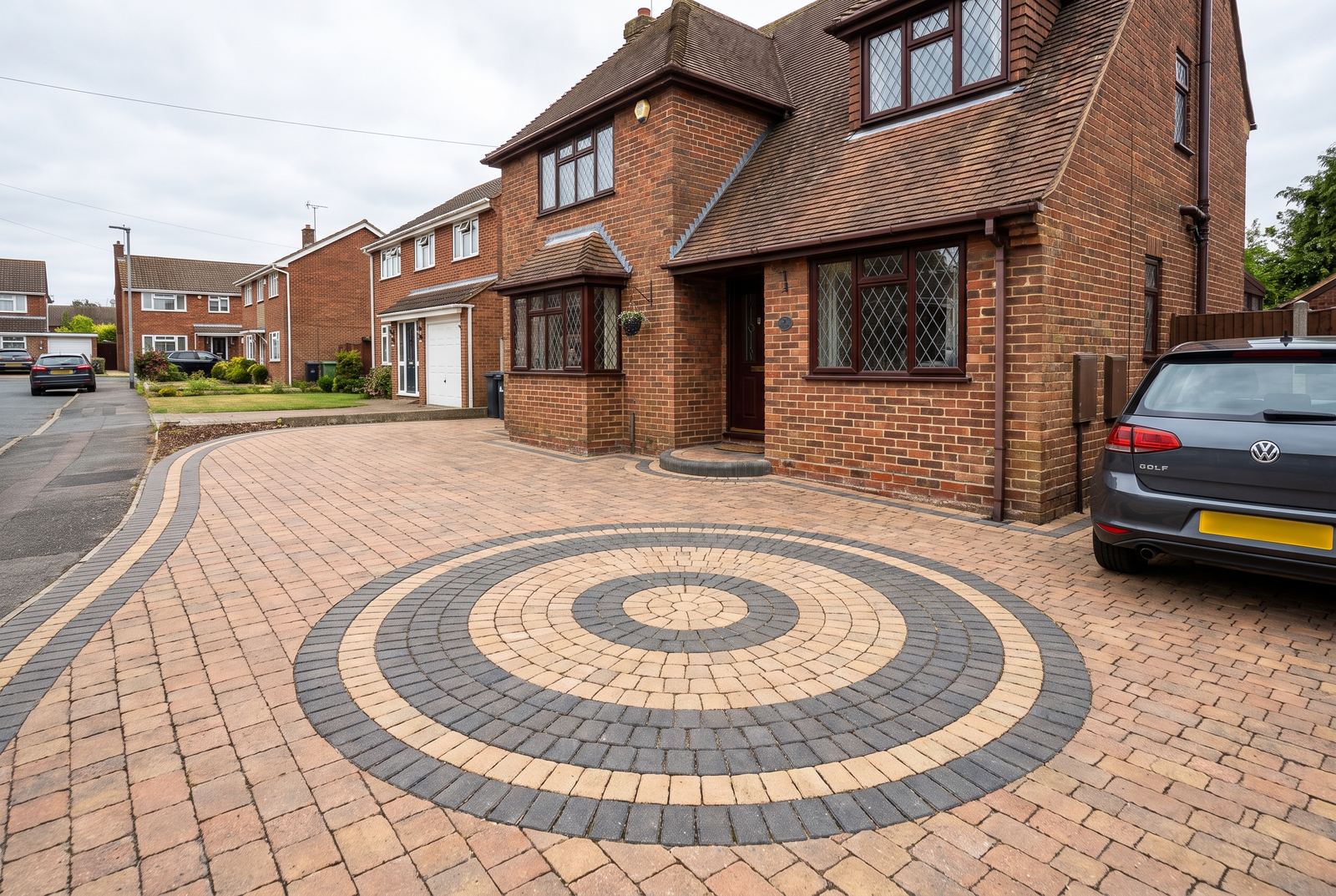
Contrasting bands, fans and feature centrepieces.
Concreted in so the edges never spread.
Wider joints and a clean stone sub-base where drainage is tight.
No surprises and no disappearing acts. You always know who is coming, what is happening next and roughly how long it will take.
John comes out, measures up, checks how the ground drains and talks through the options. You get a clear written price with no pressure.
We bring samples so you can see the colours and materials against your own house before you commit to anything.
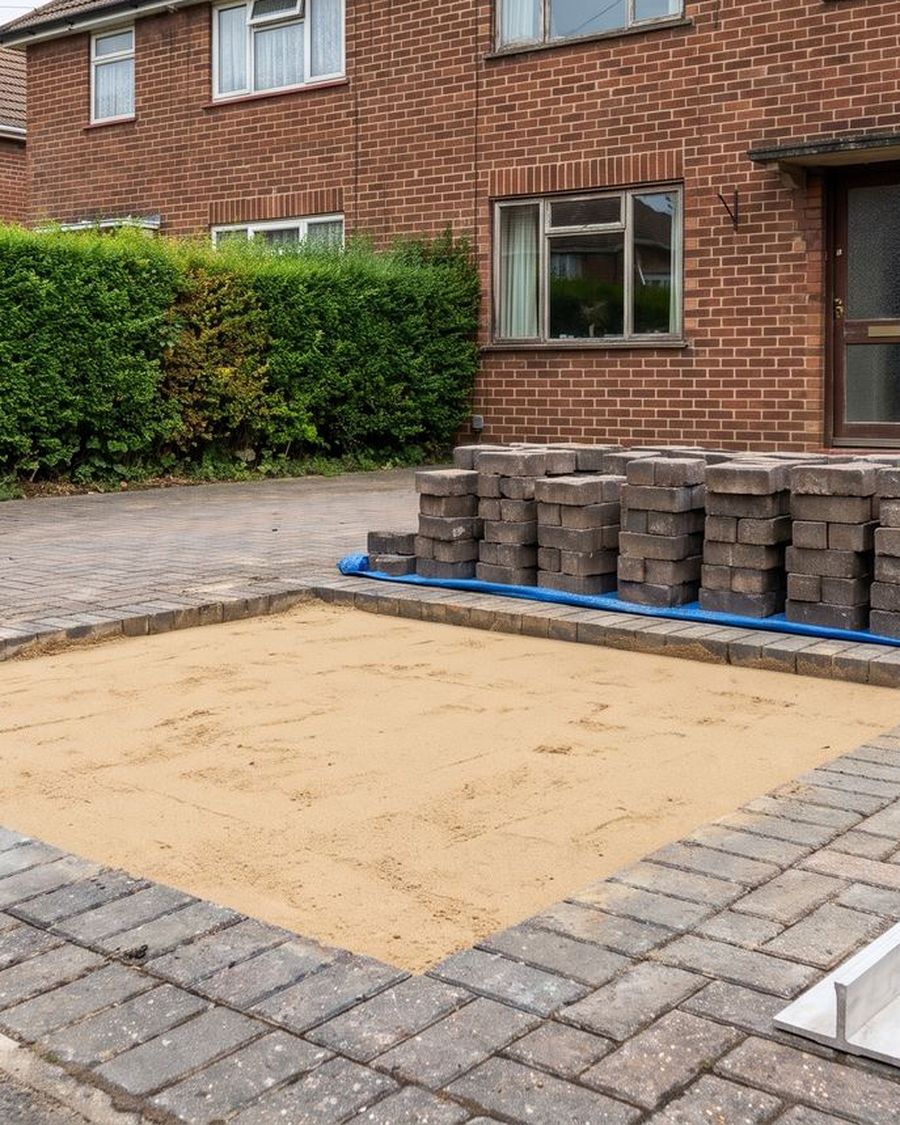
We dig out to the right depth, lay and compact the sub-base in layers and concrete in the edgings. This is the part that decides how long it lasts.
Resin, blocks or slabs laid to the correct depth by our own team, with drainage and borders finished properly.
Everything swept, all waste taken away and a walk round together so you are happy before we leave.
A selection of the finishes and colours available for this service.
Twenty to thirty years is normal for a properly built driveway, and often longer. The blocks outlive everything else. What fails is almost always the base or the edges underneath them.
It is almost never the blocks. It is usually a sub-base that was too thin or poorly compacted, an edge restraint that was never concreted in, or water escaping from a cracked gully and washing the base away.
It is optional. Sealing locks the jointing sand in place, slows weed growth and makes oil easier to clean off. It wants redoing every three to five years.
Often yes. Some older ranges are discontinued, and in that case a contrasting border usually looks far better than a near miss on colour.
We cover Surrey and the surrounding villages. Wherever you are, you get the same team and the same standards.
Tell us roughly what you have in mind and we will come out, measure up and put together a clear, written quote. No pressure and no obligation.